




Professor Jacques Hugon
MD PhD Neurologist
University of Paris Cité
After studying medicine at the Faculty of Medicine in Paris, he completed an internship in neurology at the University of Limoges. He then worked as a physician at Taez Hospital in Yemen and served as a Research Associate at the Albert Einstein College of Medicine in New York N.Y. from 1984 to 1986. During this period, he obtained a PhD in neuroscience from the University of Paris, focusing on Guam’s disease, which combines features of Parkinson’s disease, dementia, and amyotrophic lateral sclerosis. After serving for two years as a hospital practitioner in neurology, he was appointed full professor at the Faculty of Medicine in Limoges in 1989, while also working as a consultant neurologist. In the late 1990s, he was appointed Chair of Anatomy at the Faculty of Medicine of the University of Hong Kong and Queen Mary Hospital, where he became Head of Department. Upon his return to France in 2003, he was appointed full professor at Poitiers University Hospital, working in the Department of Neurology. Since 2006, he has been a full professor at the Faculty of Medicine of the Université Paris Cité and at Lariboisière Hospital, where he led the Center for Cognitive Neurology for 12 years. He has been an Honorary Professor at the University of Hong Kong and is Emeritus Professor at Université Paris Cité. He is consultant neurologist at Lariboisière Hospital in Paris (Center for Cognitive Neurology) and at the Center for Advanced Neurology in Paris. His is a member of the Inserm Unit 1144, of the World Federation of Neurology and the European Federation of Neurology as well as the European Alzheimer ‘s Disease Consortium. His current clinical and research interests include biomarkers and molecular signaling changes in neurons in Alzheimer’s disease and other neurodegenerative disorders, as well as long COVID. He has authored more than 400 publications.

Professor Koon Ho Chan
Clinical Professor, Henry G Leong Professor in Neurology, Department of Medicine, School of Clinical Medicine, HKUMed
Honorary Consultant (Neurology),
Department of Medicine, Queen Mary Hospital
K H Chan received his training in internal medicine and neurology in the University Department of Medicine, Queen Mary Hospital, Faculty of Medicine, the University of Hong Kong. He obtained his fellowship in neurology in 2001 and after staying one year of elective research on neuroimmunological disorders and related neuroimmunology focusing on neuronal and muscle autoantibodies in paraneoplastic neurological disorders and myasthenia gravis under the mentorship of Professor Vanda A Lennon in Mayo Clinic Rochester in 2000. He obtained his MD in 2007 and PhD in 2012 from HKU, and joined the University of Hong Kong as Clinical Assistant Professor in 2008, became Clinical Associate Professor in 2013 and was promoted to Clinical Professor in 2024. His research interests include autoimmune neurological disorders and related neuroimmunology, and neuroinflammation of Alzheimer’s disease. Multiple sclerosis (MS) is an important inflammatory demyelinating disorder of the central nervous system (CNS) with uncertain pathogenesis. Neuromyelitis optica spectrum disorders (NMOSD) cause severe acute myelitis, optic neuritis and encephalitis especially brainstem encephalitis, and can be misdiagnosed as MS. Detection of aquaporin-4 autoantibodies (AQP4-IgG) in serum of NMOSD patients greatly facilitate the diagnosis of NMOSD and its differentiation from MS. APQ4 is the most abundant water channel protein in mammalian CNS, which is expressed abundantly in astrocytic endfeet processes. NMOSD are more common among Asians with long-term treatments different from that of MS. K H Chan’s current research focuses on 1) clinical and radiological features of local MS and NMOSD patients, 2) understanding immunopathogenesis of MS and NMOSD especially the pathogenic role of AQP4-IgG, 3) development of novel immunotherapies for MS and NMOSD, 4) understanding the pathogenetic mechanisms/pathophysiologies of Alzheimer’s disease (AD) and 5) development of novel personalized therapeutics for AD and other neurodegenerative diseases causing cognitive impairment and dementia. He is particularly interested in the role of B cells in MS and NMOSD. He participates in international multi-center trial on new disease modifying therapies for MS and NMOSD. His team first reported that brainstem encephalitis is common among Hong Kong Chinese NMOSD patients (Arch Neurol 2010). He is actively researching on the pathogenetic mechanisms/pathophysiologies of Alzheimer’s disease (AD) focusing on microglia-mediated neuroinflammation triggered by beta-amyloid (Aβ) and tau, and dysfunction of the glymphatic system. He is exploring the potential neuroprotective effects of adiponectin (an adipokine with anti-inflammatory and insulin-sensitizing properties) and measures to improve glymphatic functions as strategies to prevent and treat AD. Professor Chan’s laboratory discovered the role of adiponectin in cognition of the mammalian brain (Mol Neurodegener 2016) and that microglia express adiponectin receptors with adiponectin signaling activity leading to anti-inflammatory effects in microglia (J Neuroinflam 2019).

Dr Yat Fung SHEA
Queen Mary Hospital
Dr. Shea Yat Fung has been a Consultant Geriatrician at Queen Mary Hospital since 2022. He specializes in dementia care, with particular interests in the application of biomarkers for Alzheimer’s disease, familial Alzheimer’s disease, and the use of anti-amyloid therapies in Hong Kong. He has completed overseas training at the Wien Center for Alzheimer’s Disease and Memory Disorders at Mount Sinai Medical Center, Miami Beach. Dr. Shea is Co-Convenor of the Brain Health Special Interest Group of the Hong Kong Geriatrics Society. He is also co-first author of the Consensus Statement on the Use of Alzheimer’s Disease Biomarkers and Anti-Amyloid Therapies in Hong Kong.

Dr Cheng Pak-wing, Calvin
MBBS (HKU), FHKAM(Psychiatry), FHKCPsych
Dr Cheng has received the Fellowship of the Hong Kong College of Psychiatrists in 2014, upon completion of his medical training at the University of Hong Kong in 2007. He has joined the Department of Psychiatry at the University of Hong Kong as a clinical assistant professor since November 2017. Dr Cheng is currently serving as an honorary associate consultant of psychogeriatric services at Queen Mary Hospital. He is also an accredited trainer of psychiatric trainees of the Hospital. He is heading the psychogeriatric day hospital services and is the representative of the clinical division of Old Age Psychiatry in the Hong Kong West Cluster. Furthermore, Dr Cheng is a former Chairman of the Young Fellows Committee of the Hong Kong College of Psychiatrists. He is also the associate editor-in-chief of the East Asian Archives of Psychiatry. He received a distinguished young fellow award from the Hong Kong Academy of Medicine in 2018. Dr Cheng has received overseas training in brain imaging and neurostimulation. He was a visiting fellow and received training as a functional MRI researcher under Athinoula A. Martinos Center for Biomedical Imaging in the Massachusetts General Hospital in 2014. He also received training of transcranial magnetic and electrical stimulation at the Harvard Medical School, the Universitätsmedizin Göttingen and the University Medical Center Utrecht from 2014 to 2016. His current research interests reside in non-invasive transcranial brain modulation for mood disorders and cognitive impairment in the elderly.

Dr. William CY Leung
Honorary Clinical Tutor,
Department of Medicine, School of Clinical Medicine, HKUMed
Resident Specialist (Neurology),
Department of Medicine, Queen Mary Hospital
To be updated
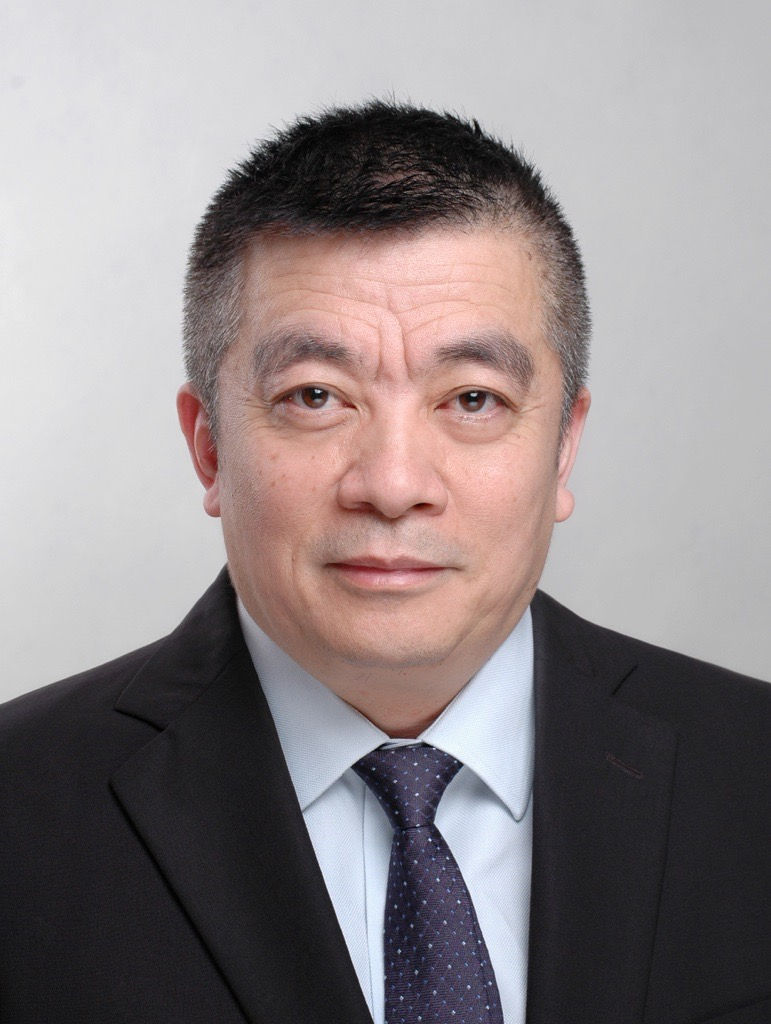
Professor Dong ZHOU
West China Hospital, Sichuan University
China Association Against Epilepsy
四川大學華西醫院神經內科學科主任,教授,博士生導師。 中國抗癲癇協會會長、中華醫學會神經病學分會腦電圖與癲癇學組組長、中國醫師協會神經內科醫師分會腦電圖與癲癇學組組長、中國醫師協會神經調控專業委員會副主任委員。在國際學術領域,擔任國際抗癲癇聯盟(ILAE)功能/分離性發作工作組委員、發作分類更新工作組委員、急性症狀性癲癇工作組委員、出版理事會中文翻譯工作組組長,曾任ILAE藥物治療委員會聯合主席及官方雜誌Epilepsia Open聯合主編。 深耕癲癇與神經電生理領域,學術成就卓著。以第一完成人身份獲2020年四川省科技進步一等獎;2024年榮獲首屆國家衛生健康委員會"國家傑出醫師"稱號;2025年獲國際抗癲癇聯盟與國際癲癇病友會聯合評選的"國際癲癇大使獎"。累計發表高質量學術論文361篇,含1篇熱點論文及4篇高被引論文,H指數58,2020—2025年連續六年入選"愛思唯爾"臨床醫學高被引學者。作為通訊作者在Lancet Neurology(IF=45.5)、Nature Reviews Neurology(IF=33.1)、Nature Communications(IF=15.7)、Neurology(IF=9.0)、Journal of Neurology, Neurosurgery & Psychiatry(IF=7.8)、Epilepsia(IF=6.6)等神經病學頂級期刊發表多篇論文。主持國家自然科學基金8項,包括重大國際合作與交流項目1項、區域創新發展聯合基金(重點類)1項。主編高等教育出版社高等學校“十四五”醫學規劃新形態教材《神經病學(第4版)》、“十四五”醫學規劃新形態教材器官-系統整合系列《神經系統》、“十一五”規劃教材《神經病學(第3版)》、我國第一本雙語教材《神經病學(雙語)》、及人民衛生出版社專著3部。創辦國內首本癲癇中、英文雜誌《癲癇雜誌》和《Acta Epileptologica》。
Professor Yuping WANG
Xuanwu Hospital, Capital Medical University
Professor Wang is the Chair of the Department of Neurology at Xuanwu Hospital, Capital Medical University. He is one of China’s leading neurologist and neuroscientist, with clinical and research expertise spanning epilepsy, movement disorders, sleep medicine, psychosomatic diseases, and neuromodulation therapies. He found the Beijing Epilepsy Diagnosis and Treatment Centre, one of the earliest and largest specialised epilepsy centres in China, and the first to identify the cognitive-related ERP component N270, an electrophysiological marker of conflict processing and cognition-consciousness transformation. Professor Wang has led the development of multiple innovative neuromodulation technologies, including multi-target transcranial electrical-magnetic stimulation systems and wearable brain signal regulation devices, and has developed novel therapeutic protocols for brain function disorders. He has directed numerous national research programmes under major funding schemes, and has received serval top national honours, including the Chinese Medical Award, the Beijing Science and Technology Progress Award, and the Wu Jieping Medical Award. Professor Wang also serves in key international and national roles, including Member of the Clinical Practice Guideline Working Group of the International League Against Epilepsy (ILAE), Member of the Education Committee of the World Sleep Society, Chair of the Neurology Branch of the China International Exchange and Promotive Association for Medical and Health Care, and Vice President of the China Association Against Epilepsy (CAAE).

Dr Fuyong CHEN
The University of Hong Kong-Shenzhen Hospital
學術任職:中華醫學會疼痛學分會第七屆青年委員會副主任委員;中華醫學會神經外科學分會第七屆青年委員會委員;中華醫學會疼痛學分會第七屆中樞痛學組副組長;中國抗癲癇協會第二屆腦電圖和神經生理理分會理事;中國抗癲癇病聯盟成立指南通信秘書;中國抗癲癇病聯盟腦電圖和神經生理工作委員會青年委員;通過沉納發表;《中國微創神經外科雜誌》編委等。 臨床:在功能神經外科和神經調控、磁波刀頸域具有豐富的臨床經驗,年開展功能神經外科手術300例左右。對腦功能疾病、帕金森病、癲癇、腦癱、運動障礙、遺傳疾病性脊髓截癱、難治性癲癇的功能性神經外科治療。 科研:基於功能磁共振成像、傾向內腦電研究神經疾病和認知的中樞機制。近年來,在 Nature Human Behavior、PLOS One、Brain, ...、PLOS Biology、PLOs、NeuroImage、Computer Methods and Programs in Biomedicine、Journal of Affective Disorder等雜誌發表SCI論文20餘篇。 課題:主持國家自然科學基金青年基金、中國博士後基金、福建省自然科學基金及福建省教育廳基金、深圳市科技創新學科和局項目(重點項目)各一項。 著作:參編、參譯專著12部。 專利:獲得用於新型專利2項,獲發明專利2項,軟件著作權2項,申請發明專利3項。

Professor Kai ZHANG
Beijing Tiantan Hospital, Capital Medical University
To be updated
Speakers

